
Protected Areas
In Trentino, over one-third of the territory is under protection: from large parks to the Dolomites UNESCO World Heritage Sites, from the UNESCO Biosphere to the 154 Natura 2000 areas, many of which are managed in coordination with the Reserve Networks. The Alpe di Campogrosso is part of these areas whose natural values are recognized by the European Union. For this reason, this territory has been given the dual designation of Special Area of Conservation (SAC) IT3120172 “Monti Lessini – Piccole Dolomiti” and Special Protection Area (SPA) IT3120099 “Piccole Dolomiti,” areas that are part of the Natura 2000 network, the largest network of protected areas in the European Community. All of this ensures the conservation of biodiversity – with 3,724 recorded animal and plant species – and quality of life. However, increasingly, the protected areas also generate opportunities for sustainable local development.
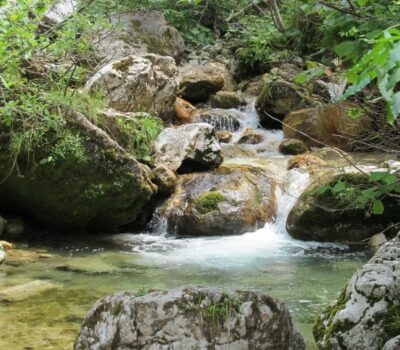
Springs
On the Alpe, there is an extensive hydrographic network that not only characterizes the Alpe and its ecosystem but also constitutes a vital resource for the inhabitants of Vallarsa. The water collection systems that serve the inhabitants of the municipalities of Vallarsa and Trambileno are located here. To protect the springs, since the 1980s, the road to Campogrosso, known as “the Seven Fountains,” has been closed to regular vehicular traffic, remaining accessible only to residents for the exercise of civic uses (access to land, wood cutting, etc.).
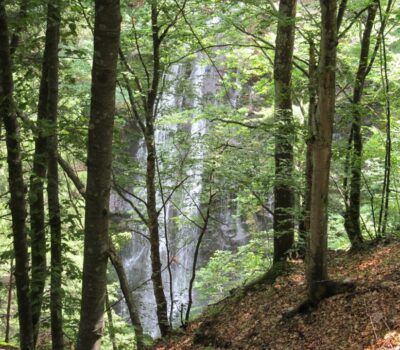
Beech Forests
On the path leading to the heart of the Alpe di Campogrosso, one passes through a splendid beech forest that has been managed since the 1930s to promote the growth of beech trees using the high forest system. This method involves growing tall trees where renewal occurs by seed rather than by root sprouting after long cultivation cycles. After many decades of this cultivation, the result is a forest with imposing trees that create a striking and unique environment for visitors while also forming an important habitat for wildlife. The beech forests of upper Vallarsa are among the most significant examples of high forest beech cultivation in Europe.
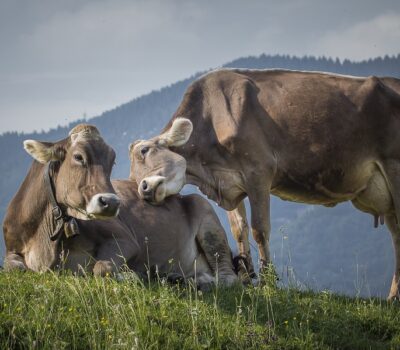
Mountain Pastures
As in many other alpine areas, the malghe (mountain pastures) constitute an important environmental and economic complex. On the Alpe di Campogrosso, there are three significant and extensive malga complexes: Malga Bovetal, Malga Prà di Mezzo, and Malga Fondi Campogrosso. These are destinations for visitors and mountaineers who can find refreshment here, but they are also workplaces for many people. The infrastructures present serve both the livestock and those who manage them. The pools created for watering the livestock also become important breeding sites for amphibians. Dogs are prohibited from entering these pools.
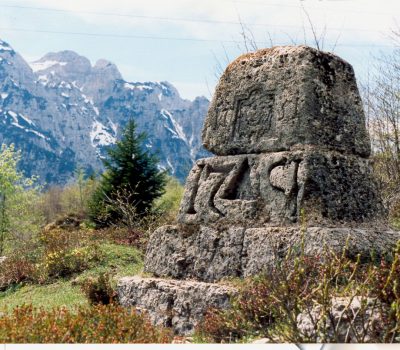
Boundary Markers
Upon reaching the present-day border between the Trentino-Alto Adige/Südtirol and Veneto regions, it is still possible to see the ancient boundary markers that, until 1918, delineated the boundary between the Austro-Hungarian Empire and first the Republic of Venice, then the Kingdom of Italy. In the mid-18th century, a “good and fair” boundary was established when, in 1751, the Venetian authorities and the court of Vienna managed to ratify an agreement. This agreement was followed by the placement of 13 boundary markers, which are still visible today.
FAUNA
Along with the flora and vegetation, the animals of the Alpe di Campogrosso contribute to the great wealth of this wonderful mountain environment. The area hosts diverse fauna, including many easily recognizable animals such as deer and chamois. Additionally, many other species can be encountered and admired, always with respect for their habits and natural habitat.
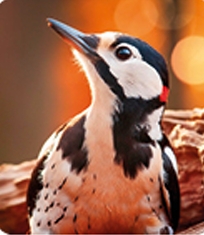
Picchio Rosso Maggiore/ Great Spotted Woodpecker
The Great Spotted Woodpecker is a medium-sized woodpecker, characterized by its black and white plumage and a red patch on its lower abdomen. It uses its beak like a chisel to dig into trees in search of food or to create cavities for nesting, and also to signal the possession of a territory.
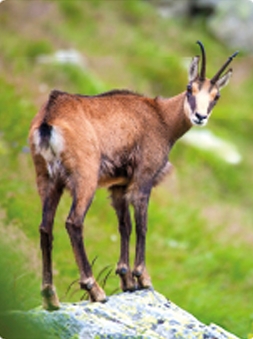
Camoscio/ Chamois
The chamois is an ungulate belonging to the Bovidae family. Its anatomical and morphological characteristics make it perfectly adapted to live in mountainous areas, even at the highest altitudes. Males and females differ slightly in size and weight.
The chamois primarily feeds on dry grasses, shrubs, lichens, conifer needles, and shoots in winter, and fresh shoots and grasses with the arrival of spring and summer. Mating occurs between October and December, with gestation lasting about 160 to 170 days. The young are born from mid-May to mid-June. In the wild, the chamois typically lives for 14 to 16 years.
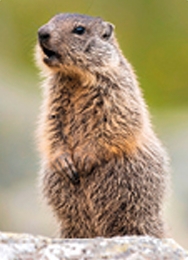
Marmotta/ Marmot
The marmot is a mammal with brown fur and grayish reflections on its back. It lives at altitudes between 1000 and 2800 meters, building its burrow primarily in sunny locations on soft ground near well-sunned pastures. It is a herbivore, with a diet consisting mainly of grasses, roots, and grains.
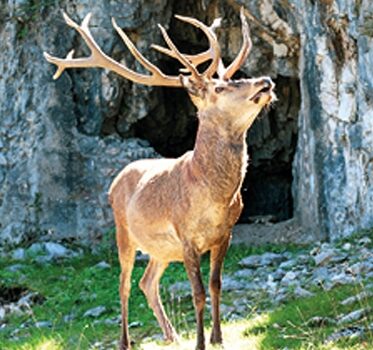
Cervo/ Deer
The deer has an elongated, slender body, a long, narrow neck, and a tight, smooth coat that varies in color according to season, sex, and age. Females have more subdued colors, while young deer have a reddish coat with white spots. The branched antlers are a defining feature of males. Each year, the antlers fall off and regrow, reaching lengths of 70 to 130 cm and averaging 4 to 6 kg in weight. Adult males can be up to 2.5 meters long and weigh between 80 and 150 kg, while females are smaller, with a maximum length of 2 meters and a weight of up to 100 kg. This herbivorous species requires 10 to 15 kg of vegetation per day, preferring herbaceous plants but also consuming shrubs and trees. During the mating season, it is common to hear the powerful roars of the males echoing through the forest.
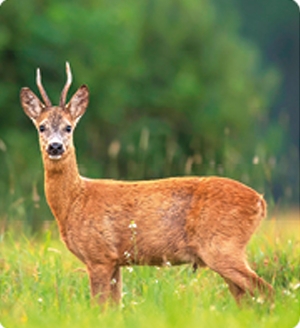
Capriolo/ Roe Deer
The roe deer is an ungulate that primarily feeds on woody and semi-woody plants such as ivy, bramble, raspberry, elder, and dog rose, but it also consumes herbaceous plants and wild fruits. Despite its small stomach size, which necessitates seeking out highly energetic foods, the roe deer exhibits a high adaptability to its diet. The breeding season occurs from mid-July to mid-August, and the female typically gives birth in May or June, usually to one or two fawns.
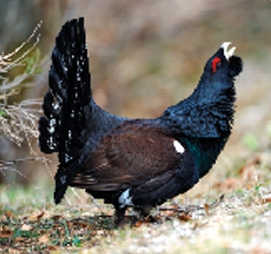
Gallo Cedrone/ Capercaillie
The capercaillie belongs to the grouse family (subfamily Tetraoninae, order Galliformes) and is considered a glacial relict species. This means it migrated from the boreal regions during the glacial period and later remained isolated in only a few locations in the Alps. This species is closely monitored by the European Union under Directive 2009/147/EC. The capercaillie primarily feeds on plants, with a particular preference for bilberries.
The courtship ritual of this species is quite unique. Males gather in a lek and compete to attract females. During the display, the male fans out his tail, lowers his wings, fluffs his beard feathers, and proudly raises his beak. The display song culminates in a loud “pop” and ends with whistling sounds reminiscent of a blade scraping on a whetstone.
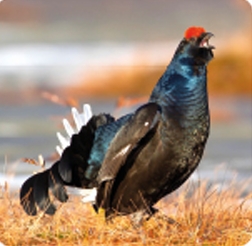
Gallo Forcello/ Black Grouse
Like the capercaillie, the black grouse belongs to the grouse family and is also monitored by the European Union. It is a bird measuring between 40 and 55 cm in length. Herbivorous, it feeds on leaves, buds, seeds, flowers, and berries.
At the end of April, males gather for their characteristic courtship displays, known as “leks,” in areas with sparse vegetation and gentle slopes. They showcase their plumage through calls, whistles, hopping, small flights, and displays. Throughout May, especially in the early morning or around sunset, it is common to hear the calls of the males.
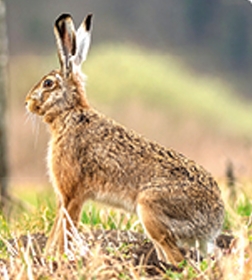
Lepre/ Hare
The hare is a crepuscular and nocturnal animal. Unlike rabbits, hares do not dig deep burrows but instead take refuge in shallow ground depressions, no more than about twenty centimeters deep. In these depressions, the hare blends perfectly with the surrounding terrain thanks to its highly camouflaged coat.
The hare has a slender body shape, with its hind legs longer than its front legs, which provides it with exceptional speed and agility as a runner and jumper. Its face is characterized by two large yellow eyes on the sides of its head, offering a very wide field of vision, though its eyesight is relatively modest. The sense of hearing is highly developed: the mobility of its large ears allows it to detect and localize even the faintest noises. The ears are enormous (about 15 cm long) with black tips, and the fluffy tail is white with a black tuft at the end.
FLORA
In the meadows and pastures of the Alps, approximately 700 species of herbaceous and woody plants thrive, according to a survey by the Museo Civico di Rovereto. Some of these plants are particularly beautiful, including orchids and primroses. Among the primroses, the Recoaro Primrose (Primula recubariensis) is especially noteworthy. This rare primrose features five blue petals.
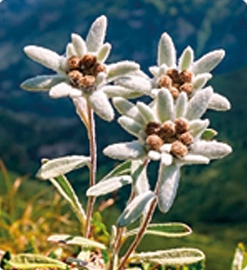
Edelweiss
The edelweiss is an alpine herbaceous plant that primarily grows in rocky and harsh terrains at high altitudes. The flowers are unmistakable due to their snow-white color and distinctive shape. The edelweiss is highly resilient, enduring frequent temperature fluctuations and harsh climatic conditions. It withstands long winter frosts as well as intense exposure to sunlight and ultraviolet rays, which are more pronounced at high elevations.
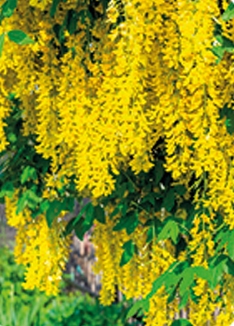
Maggiociondolo/ Laburnum
The laburnum is a deciduous shrub or small tree that can reach heights of 6 to 7 meters, with an erect trunk. It features smooth, gray-green bark and young branches covered in a soft down. The leaves are alternate and composed of three elliptical leaflets, which are gray-green on the upper side and have white, silky hairs on the underside. The yellow flowers are sweetly scented and grouped in long, pendulous racemes. The legumes are 4 to 8 cm long, pubescent, with non-winged seams. The pods remain on the plant through the winter and contain black seeds.
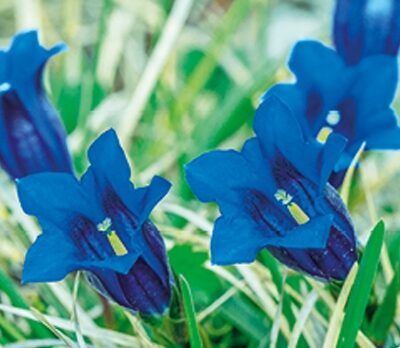
Genziana/ Gentian
The gentian is a beautiful flower, usually blue or dark blue, characterized by its funnel-shaped form. It thrives in acidic or neutral soils that are rich in humus and well-drained and can be found in areas that are fully or partially sunny.
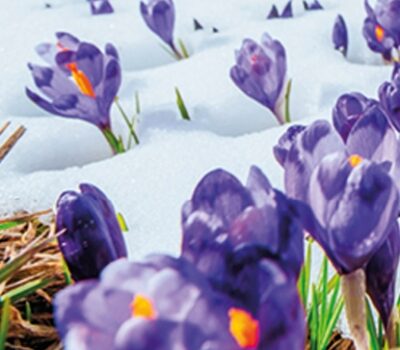
Crocus
Crocuses, also known as snowdrops, are among the first flowers to appear in the mountains after winter. Their blooming is particularly enchanting, adding a touch of magic to the landscapes with their vibrant white and purple colors.
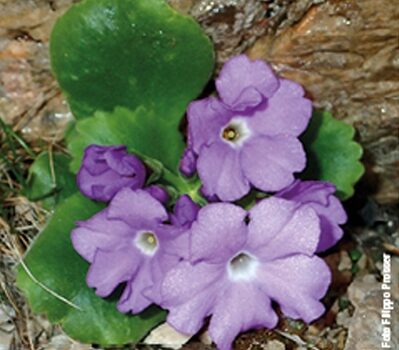
Primula Recubariensis
Primula recubariensis is commonly found on the slopes of the high Vallarsa and is a notable species in the Alta Vallarsa region.
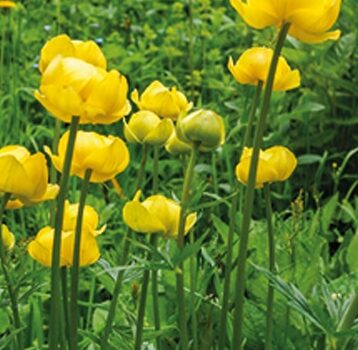
Ranuncolo/ Buttercup
The buttercup, also known as Ranunculus or “golden button,” is a perennial herbaceous plant that can grow up to one meter or more. Its golden-yellow flowers have about fifteen petals that close to form a globe. It blooms from June to August in moist meadows, shrublands, and areas with nutrient-rich soil.
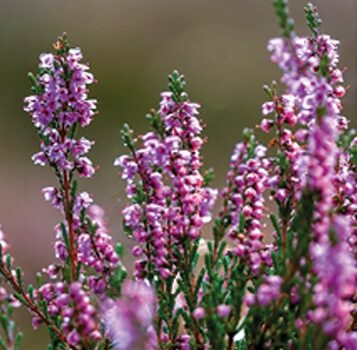
Erica/ Heather
Heather grows spontaneously in meadows, pastures, and rocky slopes in sunny areas with calcium-rich soils. It is found in the Alps and Apennines up to 2,500 meters above sea level.
This dwarf shrub can reach up to 40 cm in height and has a creeping, thin, woody stem that primarily spreads horizontally, forming a flowering cushion. The small bell-shaped flowers, with darker stamens longer than the petals, have a corolla in various shades of pink, ranging from flesh-colored to light pink, and are grouped unilaterally in terminal clusters. The leaves are needle-like and evergreen.
Heather is partially protected and is also used as a medicinal plant.
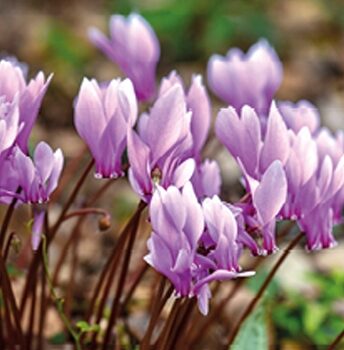
Ciclamino/ Cyclamen
Cyclamen is commonly found in shady forests, especially those dominated by beech trees. The fragrant flowers are pinkish-violet with five lobes that are characteristically reflexed backward. The leaves are green with white variegation on the upper side and reddish on the underside.
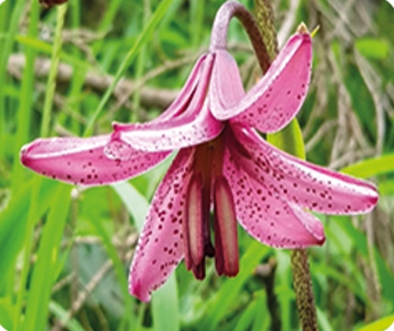
Giglio Martagone/ Martagon Lily
The Martagon lily is widespread in the Alps and Apennines, thriving at elevations between 300 and 2,500 meters above sea level. It grows in meadows, alpine pastures, and woodlands, favoring fertile and moist soils. This perennial herbaceous plant reaches a height of 30 to 100 cm, with flowers that are purple and pale pink, adorned with darker spots.
The flowers have six recurved petals that face upward and are supported by an upright, sturdy stem. Long lanceolate leaves are concentrated at the base of the plant. The Martagon lily is a protected species.